RV Rental Near Santa Rosa Plateau Ecological Reserve in Temecula, CA
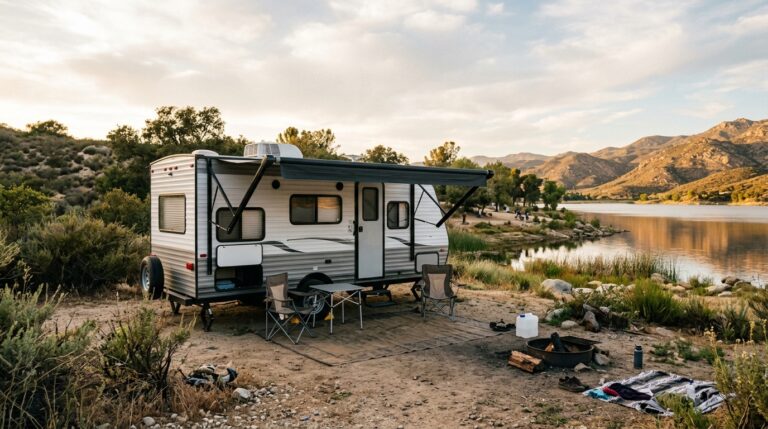
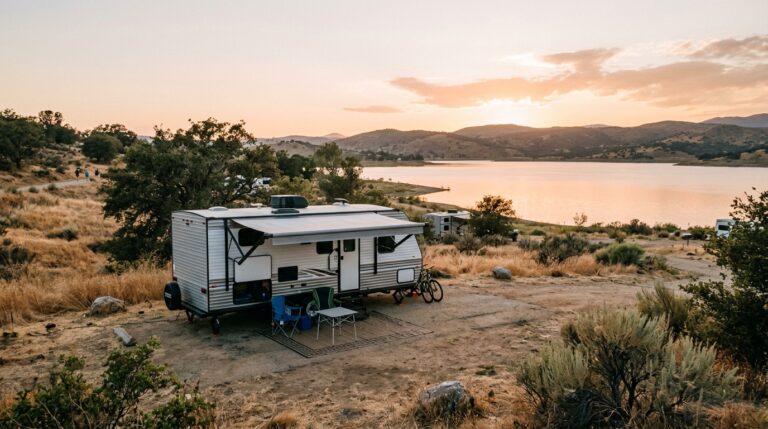
Every spring, usually right around late February when the vernal pools start filling up on the mesa, I get a wave of calls from people who’ve just heard about the Santa Rosa Plateau Ecological Reserve for the first time and want to spend a real chunk of time out here — not just a quick afternoon day trip. My answer is always the same: the Reserve itself is day-use only, there are no RV hookup sites on the property, but you’re sitting just minutes from some genuinely great full-hookup campgrounds, and renting one of our rigs is the smartest way to make a multi-day trip out of it. I deliver right to your base camp, you get a comfortable home to come back to every evening, and the Reserve is waiting for you each morning when the trails are cool and the wildlife is moving.
What the Santa Rosa Plateau Ecological Reserve Actually Is (and Why It Matters for Your RV Trip)
The Santa Rosa Plateau Ecological Reserve sits on Clinton Keith Road just west of Interstate 15, roughly a 15-minute drive from central Temecula. It’s managed by the Riverside County Regional Park and Open Space District in partnership with The Nature Conservancy, and it protects one of the last remaining stands of native Engelmann oak woodland and seasonal vernal pools in all of Southern California. When those vernal pools fill in late winter and early spring, they support rare fairy shrimp and wetland wildflowers that you genuinely cannot see anywhere else in this region — this isn’t me being promotional, it’s just a biological fact that keeps this place on birders’ and naturalists’ radars year-round.
The trail network covers around 40 miles spread across more than 9,000 acres, so there’s more here than most visitors realize on a single visit. The Vernal Pool Trail loop, the Los Santos Trail, and the Mesa Trail each give you a very different experience of the landscape. But here’s the part that matters to you as someone considering an RV rental: there are no overnight facilities, no hookups, no dump station, and no place to park a rig overnight on the Reserve property. The gate closes in the evening. If you want to spend three or four days really working through the trail system — which is the right way to experience a place this size — you need a nearby base, and that’s exactly what we set up for you.
The Closest Full-Hookup Base Camp: Lake Skinner Recreation Area
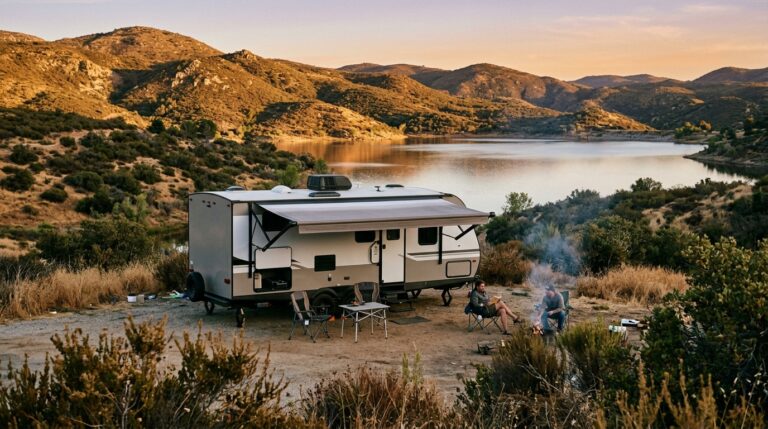
When someone tells me they want to spend serious time at the Santa Rosa Plateau Ecological Reserve, the first campground I point them toward is Lake Skinner Recreation Area on Warren Road in Winchester. It’s a Riverside County park, it has full hookup sites with water and electric, and from the campground to the Reserve’s main trailhead on Clinton Keith Road you’re looking at roughly 20 to 25 minutes on mostly rural two-lane roads — Winchester Road to Murrieta Hot Springs Road, west to Clinton Keith, and you’re there. I’ve done that drive enough times to know it’s genuinely easy, and the roads to the campground itself are wide and well-graded, so I don’t have to do any unusual maneuvering on delivery day.
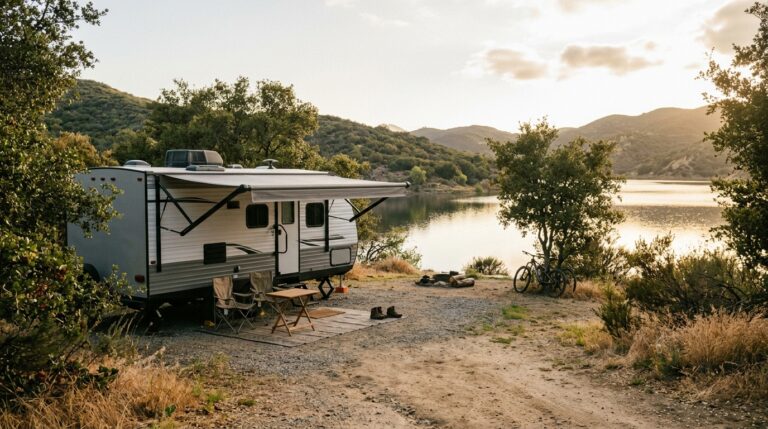
Lake Skinner also gives you something the Reserve can’t: a full evening. After a long day on the mesa you can come back to a proper kitchen, a real bed, and a deck chair facing the water. That’s the combination that turns a day trip into a real trip. Pechanga RV Resort in Temecula is another solid option if you want more resort-style amenities — it’s a few minutes closer to I-15, and I deliver there regularly as well. Vail Lake Resort off State Route 79 is worth considering if you want a more rustic feel and don’t mind a bit more distance from the Reserve.
When to Plan Your Santa Rosa Plateau RV Trip
I’ll be straight with you about the seasons because it matters for how you plan. The single best window for the Santa Rosa Plateau is late February through mid-April. That’s when the vernal pools are at their fullest, the Engelmann oaks are leafing out, and the wildflowers on the mesa are doing what they do. Temperatures during those weeks are typically in the mid-60s during the day and drop into the mid-40s at night at elevation — comfortable hiking weather, and exactly the kind of cool nights where having a well-insulated rig makes a big difference versus tent camping. I see a real surge in rental requests for this window every year, so if you’re targeting March, call me well ahead.
Summer is doable but demanding. The Reserve sits at roughly 2,000 feet elevation, which takes some edge off the Inland Empire heat, but July and August afternoons can still push into the low 90s on the exposed mesa sections. I recommend early morning starts — the trailhead is open early, and by 7 a.m. it’s genuinely pleasant out there. Fall is underrated: October and November bring clear skies, lower crowds, and the oak woodland turns in a way that most people don’t associate with Southern California. Winter visits after December rains can be surprisingly beautiful, with green grass on the mesa that locals sometimes compare (generously, but not inaccurately) to the California coast ranges.
Which RV Works Best for This Trip
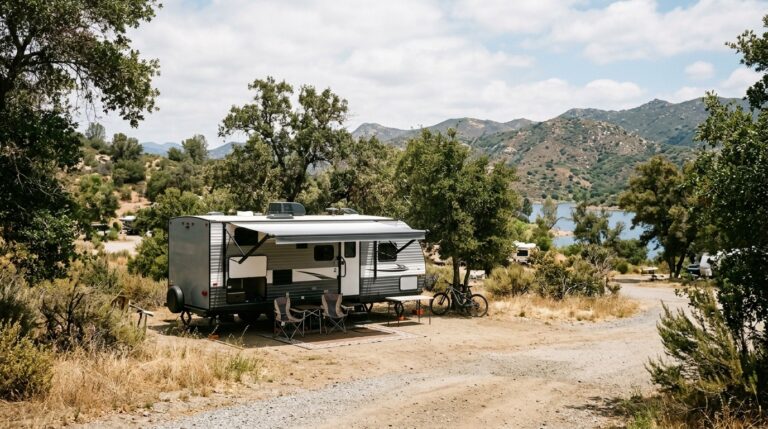
Because you’re basing at a campground rather than parking the rig at the Reserve itself, the size question is really about campground fit rather than trail access. Lake Skinner has a range of site lengths, and I’ve parked larger travel trailers there without issue — but I always confirm your specific site assignment with the park before delivery, because some loops run shorter than others and I’d rather know in advance than find out at the gate.
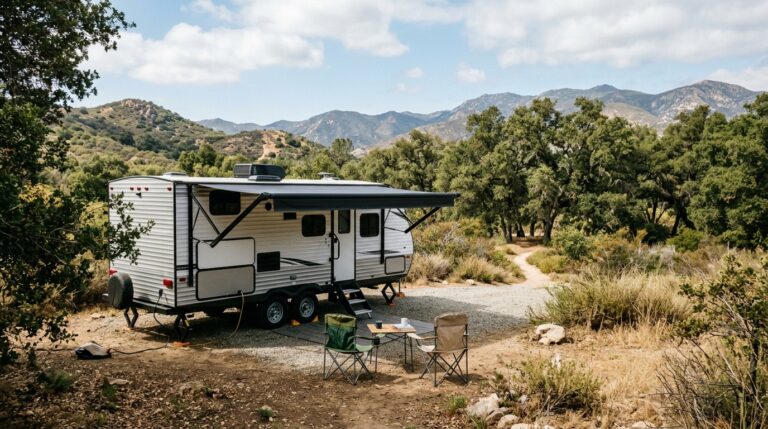
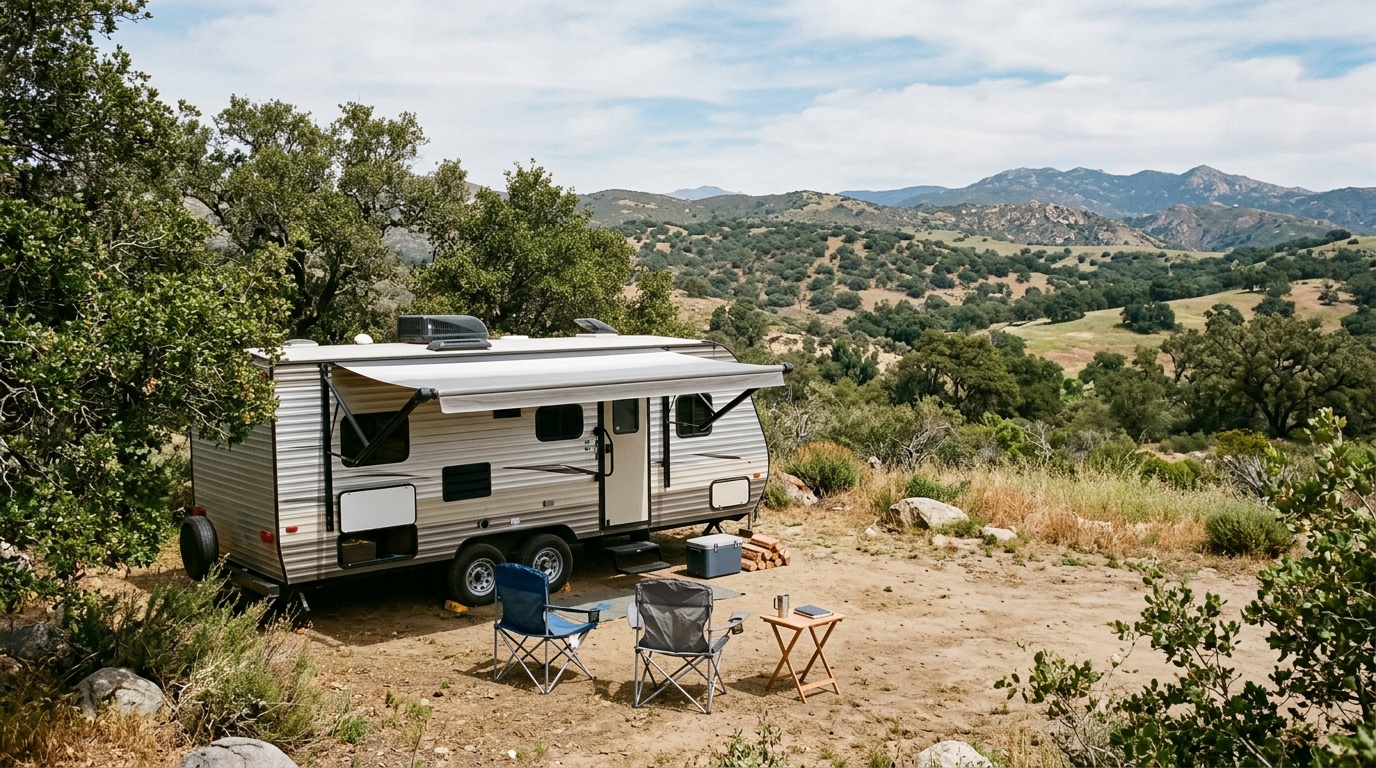
For a trip focused on hiking and nature observation, most of our renters in this situation go with a mid-size travel trailer or a smaller Class C motorhome. You get a real kitchen for packing your own lunches (important when you’re planning full-day hikes and the nearest lunch spot is a drive away), a comfortable place to decompress in the evening, and enough storage for gear, layers, and binoculars. If you’re bringing kids or a larger group, a bigger unit gives everyone their own space to recover after a day on the mesa — and the Reserve’s trails genuinely tire kids out in the best possible way. Reach out and I’ll help you match the right rig to your group size and the specific campground sites available on your dates. You can also browse the fleet to get a sense of what we have available across the Inland Empire / Temecula Valley area.
How Delivery and Setup Work for Temecula-Area Campgrounds
I deliver and set up every rental personally or with my team — we don’t hand you keys in a parking lot and wish you luck. For a Lake Skinner delivery, I bring the trailer in from the Winchester Road entrance, pull through to your designated site, level and stabilize the rig, connect water and electric, and walk you through everything before I leave. The whole setup process usually takes under an hour once I’m on-site. You leave when your trip is done; I come pick it up.
One thing I always tell first-timers headed to this part of Riverside County: the roads between the campground and the Reserve’s Clinton Keith Road trailhead are two-lane and occasionally narrow around the older ranch properties west of I-15. None of that is a problem in a personal vehicle, and since your RV stays at the campground, you’re just driving yourself out there each day in your tow vehicle or personal car. That’s actually one of the advantages of the delivery-and-base model — you never have to worry about maneuvering a big rig on rural western Riverside County back roads.
What to Know Before You Go: Reserve Entry, Parking, and Trail Tips
A few things I pass along to every renter headed out to the Santa Rosa Plateau Ecological Reserve, drawn from being out here regularly and from the questions I get after trips:
- Entry fee and parking: There is a per-vehicle day-use fee at the main trailhead on Clinton Keith Road. The parking area there is a standard paved lot — no issue for a passenger vehicle or small SUV. The lot can fill up on weekend mornings in March and April, so I recommend arriving before 8 a.m. if you’re going during peak wildflower season.
- Dogs on the trails: Dogs are allowed on some trails within the Reserve but not all — specifically, dogs are not permitted on the Vernal Pool Trail to protect the sensitive habitat. Check the current trail map at the visitor center before you set out, and bring a leash regardless.
- Cell service: Coverage on the mesa itself is spotty to nonexistent depending on your carrier. Download the trail map offline before you leave the campground, and let someone know your intended route. This is genuinely rural terrain once you get out on the longer loop trails.
- Water on the trails: There is no potable water available on the trail system. Pack more than you think you need — the mesa is exposed and the sun reflection off the vernal pools can be surprisingly intense even in March. I always tell renters to treat this like a desert hike in terms of water, even when it doesn’t look like one.
- Wildlife: The Reserve is home to mountain lions, bobcats, mule deer, and golden eagles, among many other species. Sightings aren’t guaranteed but they’re real — this is a functioning wildlife corridor, not a manicured nature walk. Keep kids close on the narrower trail sections.
- Visitor Center hours: The visitor center at the main trailhead has limited staffed hours, typically on weekends. Weekday visitors often find it unstaffed, so check with Riverside County Regional Parks for current hours before planning to pick up maps or permits on-site.
If you’re planning a trip to the Santa Rosa Plateau Ecological Reserve and want to make a proper multi-day experience out of it, give me a call at 951-297-9140 or send me an email at [email protected] — I’m happy to talk through your dates, your group size, and which nearby campground makes the most sense as your base. You can also browse the fleet to see what’s available for your window in the Inland Empire / Temecula Valley area, and check our campgrounds and RV parks guide for a fuller look at the overnight options within easy range of the Reserve — from Lake Skinner to Vail Lake to the campgrounds deeper into Cleveland National Forest along State Route 79.